
Journal
Why Persian Rugs Still Lead the World in Value
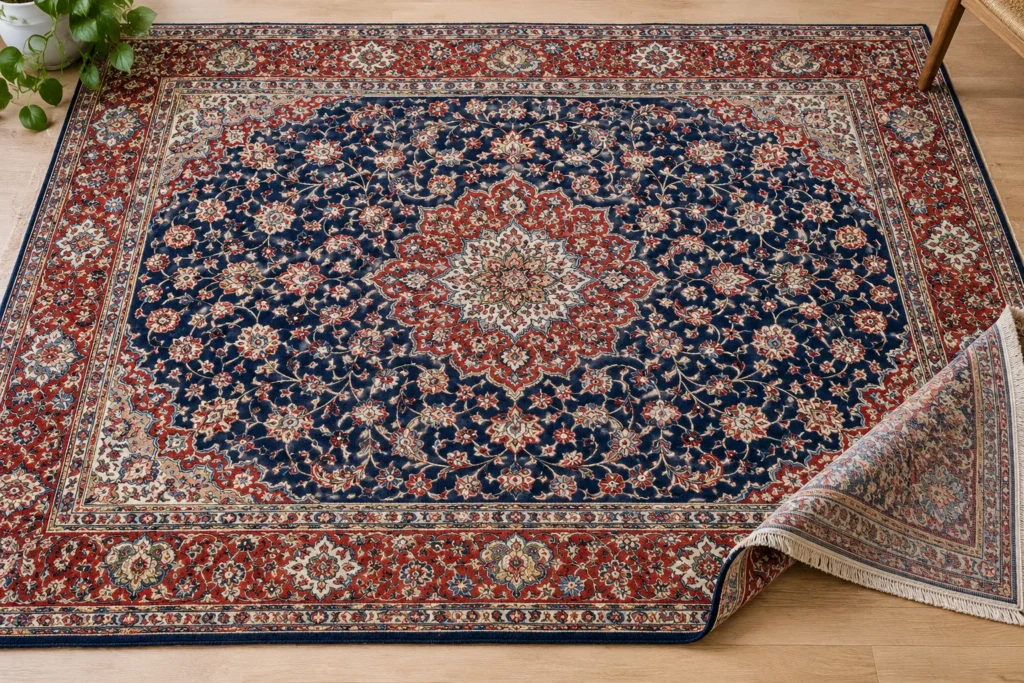
Persian rugs occupy a distinguished position in the history of decorative art. Their reputation is not simply the result of fashionable interiors or a familiar label. It rests on centuries of sophisticated design, skilled weaving, international trade and the survival of exceptional works in major collections. But to say that every Persian rug is valuable, or that all will appreciate, would confuse heritage with the behaviour of a market.
The high point often discussed by historians is Safavid Iran. Under royal patronage, workshops developed intricate compositions that brought together floral design, medallions, fine materials and remarkable technical control. The Metropolitan Museum of Art documents surviving sixteenth- and seventeenth-century carpets with silk and, in some cases, metal-wrapped threads. Such works were made for palaces, important patrons and diplomatic exchange. Their rarity today helps explain their place in museum and auction-house collections.
The wider Persian tradition is more varied. Urban workshop rugs, village weaving and nomadic traditions express different aesthetics and methods. A refined city carpet may be prized for its intricacy; another piece may be sought for its bold geometry, unusual colours or distinctive local character. One cannot sensibly rank them merely by counting knots.
Nor does 'Persian' tell the whole story. Turkish, Caucasian, Central Asian and Indian textiles have their own major collecting histories. Christie’s presents important antique carpets from across the Silk Road and Europe. Collectors judge individual works, not only national categories, and changing tastes can influence demand.
For someone contemplating a purchase, four questions are more useful than an investment slogan. What is the piece believed to be, and on what evidence? How much of its original material and character survives? Is the condition disclosed and understood? What comparable works have actually sold, rather than merely been offered, for? Answers may remain approximate, but uncertainty acknowledged is better than certainty invented.
Owners should also distinguish decorative quality from rarity. An attractive handmade rug can give decades of pleasure without commanding a specialist auction price. Conversely, an important but worn historical example may attract collectors because so few related works survive. Christie’s notes that age, restoration and artistic merit interact in sometimes unexpected ways.
Preservation follows from these distinctions. A rug's long-term significance may depend on original dyes, structure and details that appear unremarkable to an untrained eye. An aggressive attempt to improve its appearance might remove precisely the evidence that supports its attribution. A thoughtful care decision starts with understanding the work before changing it.
The collector's task, then, is to move beyond labels and become curious about the evidence within the textile. The reverse, the edge finishes, the wear patterns and the relationship between design and structure often reveal more than a dramatic sales description ever could.
H. Behnam's knowledge of Persian and antique rugs is central to Oriental Rug Services Ltd's heritage practice. Whether a piece is a substantial collector's acquisition or a quieter family possession, an expert examination can help place it in context and establish a proportionate approach to care.
Sources and further reading
The Metropolitan Museum of Art, Carpets for Kings