
Journal
How Museums Keep Their Rugs Alive for Centuries
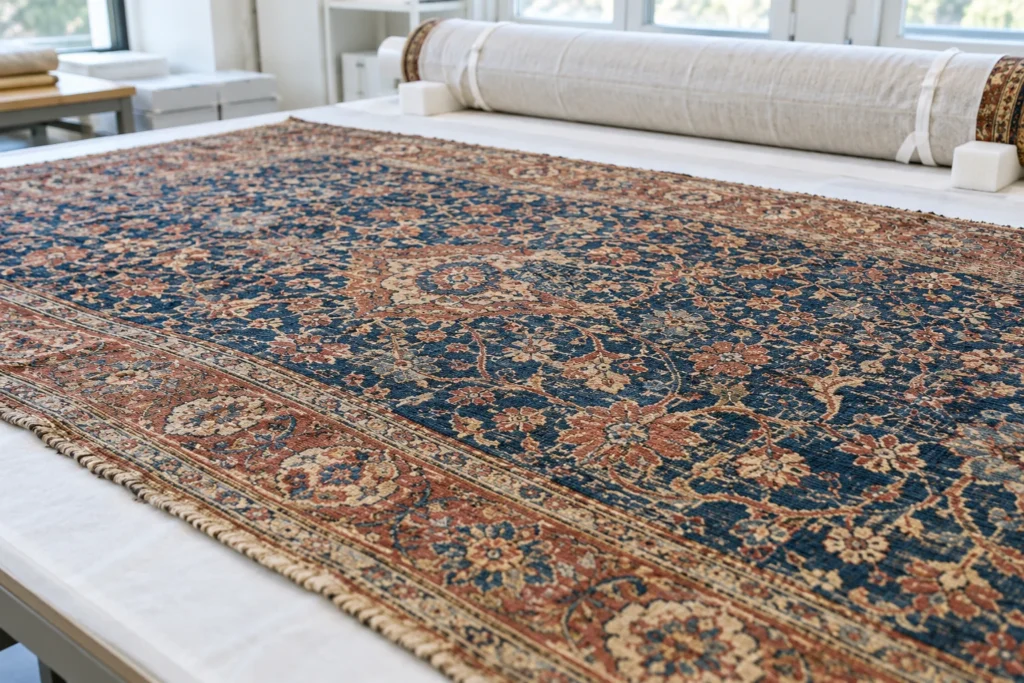
There is a useful difference between preserving a rug and trying to make it look new. Museums understand that difference because their responsibility extends beyond the present generation. They must protect what survives today while leaving enough original material for future scholarship and enjoyment. A private owner of an important rug faces a similar question, even when the piece remains part of everyday life.
The first museum principle is surprisingly ordinary: prevent harm before repairing it. Light, dust, unstable conditions, insects and rough handling can steadily diminish an historic textile. The Canadian Conservation Institute identifies these as major causes of deterioration and advises measures that reduce their cumulative effects. Conservation often succeeds through many small decisions rather than one dramatic restoration.
Light deserves particular attention. A rug in a beautiful south-facing drawing room may receive direct sunlight for hours. It is tempting to think that fading merely softens the colours, but prolonged exposure can also weaken fibres. Once a dye has faded, the original colour cannot simply be recovered by washing. Window coverings, thoughtful placement and periodic rotation are practical ways to reduce uneven exposure.
Humidity requires judgement rather than obsession with a single number. Excess moisture can encourage mould and colour movement, while heat and severe fluctuations can stress fibres. A stable, comfortable environment is generally preferable to a damp basement, overheated conservatory or poorly ventilated storage space. The owner should also check the underside of the rug, where emerging problems are less easily noticed.
Dust is not merely unsightly. Particles lodged within a weave can abrade fibres during use. Appropriate, cautious maintenance therefore has a preservation purpose. Yet a fragile or damaged textile may not tolerate ordinary vacuuming. The method must reflect its condition. Museum thinking begins by asking what an object can safely withstand.
Storage illustrates the same principle. Folding a large rug may create persistent creases and structural stress. The Canadian Conservation Institute recommends clean, dry, appropriately supported rolled storage, using suitable protective materials. An inherited piece awaiting a decision is better assessed and stored correctly than tucked into an attic for years.
An antique rug in a family home need not be treated as an untouchable exhibit. Its enjoyment is part of its meaning. A carefully selected underlay, sensible furniture placement, pest checks and an informed maintenance routine can allow use without indifference. The goal is to slow avoidable deterioration, not to suspend time.
A simple home record can borrow from that discipline. Note when the rug was examined, photograph its vulnerable areas and keep any specialist advice. Over years, these observations may show whether a condition is stable or progressing, helping the next decision remain proportionate.
Museums have specialist conservators, records and treatment protocols. Their example should inspire good questions, not unsupported claims that every private intervention is 'museum-grade'. Oriental Rug Services Ltd applies a preservation-first philosophy to valuable works, including those held in distinguished London homes and institutional collections. Owners can request an assessment to understand the care their particular piece merits.
Sources and further reading
Canadian Conservation Institute, Basic Care: Carpets and Rugs
Canadian Conservation Institute, Preventive Conservation Guidelines for Textiles