Journal
The Green Side of Rug Care
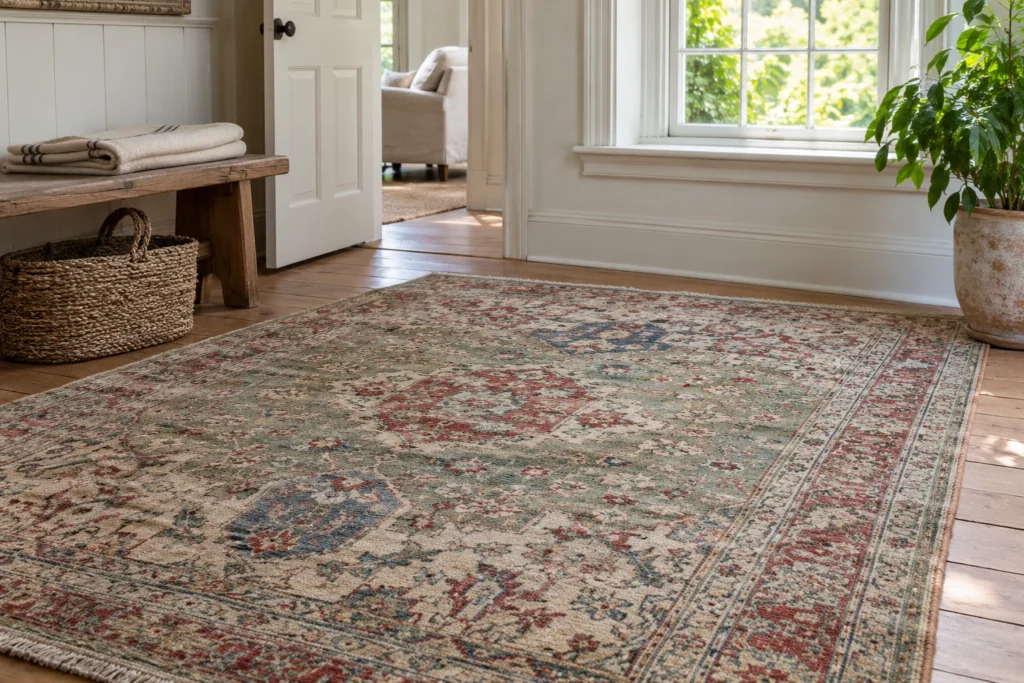
A handwoven rug may remain in use long after the original purchaser has gone. Its longevity is part of its appeal, and often a reason to think carefully before replacing it. Yet discussions of environmentally responsible rug care can become too simple. A product labelled 'natural' is not necessarily safe for historic fibres, and a treatment advertised as 'green' may still consume water, energy and materials.
A more useful starting point is the life of the object. The longer a sound rug remains serviceable and appreciated, the less frequently it needs to be replaced. Maintaining a piece that already exists may therefore be preferable to buying another, although any claim of quantified environmental savings would require a proper comparison of materials, transport, treatment and alternative purchases.
Prevention usually deserves priority. Keeping grit from abrading fibres, managing sunlight and avoiding prolonged damp conditions may reduce the need for larger interventions. The Canadian Conservation Institute explains how dust, light, poor storage and unsuitable humidity can damage historic textiles. These are conservation concerns first, but preventing avoidable deterioration can also reduce demand for future repair materials and repeated treatments.
When cleaning becomes necessary, the least intrusive effective method should be considered. There is no universal recipe. Wool, silk, cotton foundations, unstable dyes and old repairs respond differently to water, chemicals and mechanical action. A process that is suitable for one antique may be entirely unsuitable for another. The Canadian Conservation Institute warns that wet cleaning is irreversible and that even tested dyes can move unexpectedly.
Natural dyes are often spoken of as inherently superior. Their historic importance can be considerable, especially where they form part of a rug's original character. But 'natural' does not mean harmless, and adding dye to correct fading can itself alter an antique. A responsible specialist should explain the purpose, compatibility and likely limitations of any proposed material rather than rely on its origin as proof of safety.
Environmental thinking also involves avoiding unnecessary work. It may be wiser to stabilise a loose edge, adjust furniture placement or improve storage conditions than to undertake extensive decorative reconstruction. Conversely, ignoring genuine structural damage can lead to a much larger intervention later. The balance depends on the condition and significance of the individual piece.
Owners can ask practical questions without needing technical expertise. Why is this treatment proposed? Which areas are at risk? Is washing necessary? How will dye stability be assessed? What advice will help keep the rug in good condition after its return? Clear answers support both preservation and responsible resource use.
Sustainability claims should be specific. What will the process change, which materials will be used, and how will the rug's original fibres and dyes be protected?
At Oriental Rug Services Ltd, traditional hand skills and carefully selected cleaning methods are directed towards the continued life of each work. For valuable textiles, the strongest environmental claim is often the most modest: preserve what exists, intervene only where justified, and avoid sacrificing historic material for a short-lived cosmetic result.
Sources and further reading
Canadian Conservation Institute, Basic Care: Carpets and Rugs